ALL SOLUTIONS FOR STEEL PIPE/TUBE PRODUCTION
Machine Model :ZY-76
| Raw material |
hot rolled steel, galvanized steel |
| Round tube outer diameter |
31.8mm-88.9mm |
| Wall thickness Round tube |
1.2mm-3.75mm |
| Tube welding speed |
100m/min |

Product Overview
The Hot-Dipped Galvanized Steel Pipe Mill and Roll Forming Equipment is designed for factories that need continuous production of galvanized steel pipes, GI round tubes, square tubes, rectangular tubes, fence pipes, greenhouse pipes, and light structural tubes.
This equipment can process galvanized steel strip, cold rolled steel strip, or low carbon steel strip according to the customer’s product requirements.
A clear point must be confirmed before machine selection: some customers need to produce pipes from pre-galvanized steel coil, while others need to produce welded black pipe first and then send the pipe to a separate hot-dip galvanizing process.
These two routes require different production planning, surface protection methods, weld seam treatment, and quality control.
Problem: What problem does the buyer need to solve?
Many buyers search for a hot-dipped galvanized steel pipe mill because they want corrosion-resistant pipes for outdoor construction, agricultural frames, fencing, scaffolding, water systems, or general steel tube markets.
The real problem is not only how to form the pipe. The buyer also needs to know whether the machine can protect the galvanized surface, control the weld seam, keep pipe dimensions stable, reduce zinc layer damage, and match the final pipe standard.
If the production line is selected only by pipe diameter or price, the factory may face surface scratches, unstable welding, poor forming accuracy, high scrap rate, and frequent roll adjustment problems.
The correct solution should match the material, pipe size, wall thickness, coating requirement, production speed, and final application.
Cause
Galvanized pipe production is more sensitive than ordinary black steel pipe production because the zinc-coated surface must be protected during forming, welding, sizing, cutting, and handling.
When galvanized steel strip passes through roll forming stands, improper roll design or excessive forming pressure may scratch the zinc layer. This can reduce corrosion resistance and affect the final pipe appearance.
During high-frequency welding, the zinc coating near the weld area may be affected by heat. If welding parameters, edge alignment, squeeze pressure, and weld bead treatment are not controlled well, the pipe may have weak welds or poor surface quality.
For square and rectangular galvanized tubes, the corner forming process also needs attention. Sharp corner pressure, poor roll pass design, or unstable sizing can lead to coating damage, poor corner shape, and dimensional error.
This is why a galvanized pipe mill should not be treated as a simple welded tube machine. It needs a forming and handling design that considers surface protection and corrosion-resistance requirements.
Solution
Zhongyue Metallurgy Equipment Technology provides customized hot-dipped galvanized steel pipe mill and roll forming equipment based on tube size, steel material, coating condition, production speed, final application, and factory layout.
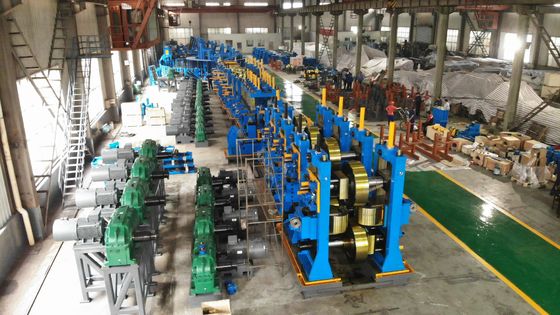
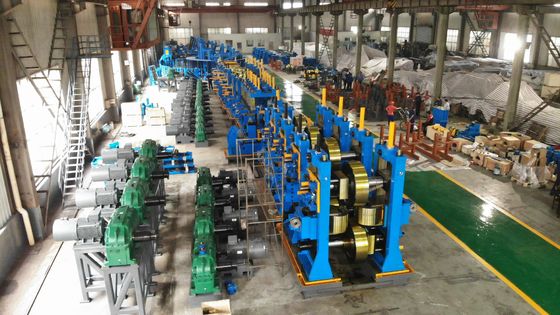
The production line can include uncoiler, shear and end welder, accumulator, forming mill, high-frequency welding system, weld seam treatment device, cooling section, sizing section, flying saw, run-out table, and optional testing or packing equipment.
For pre-galvanized steel strip production, the main design focus is smooth roll contact, controlled forming pressure, stable edge welding, reduced surface friction, and clean pipe handling.
For black pipe production before separate hot-dip galvanizing, the main design focus is weld seam strength, pipe roundness, straightness, cutting accuracy, and compatibility with downstream galvanizing and inspection.
The goal is to help customers produce galvanized pipes with stable dimensions, good surface appearance, reliable weld quality, and lower production waste.
A qualified solution should not only provide a machine. It should help the buyer understand which production route is suitable, what pipe range can be produced, what standards may apply, and what supporting equipment is needed.
Specifications
| Item |
Typical Configuration / Customizable Range |
| Product Name |
Hot-Dipped Galvanized Steel Pipe Mill and Roll Forming Equipment |
| Raw Material |
Galvanized steel strip, cold rolled steel strip, low carbon steel strip |
| Pipe Shape |
Round pipe, square tube, rectangular tube, customized tube profile |
| Typical Wall Thickness |
0.8–6.0mm, customized according to pipe size and material |
| Typical Pipe Application |
GI pipe, fence tube, greenhouse tube, construction tube, furniture tube, structural tube |
| Welding Method |
High-frequency welding |
| Forming Method |
Roll forming with customized roll pass design |
| Main Line Components |
Uncoiler, shear welder, accumulator, forming, welding, sizing, cutting, run-out table |
| Cutting Method |
Flying saw or flying cold saw |
| Control System |
PLC control with operator panel |
| Roll Material |
Customized according to material hardness, production volume, and surface requirement |
| Surface Protection Focus |
Reduced scratching, stable forming pressure, proper pipe handling |
| Optional Equipment |
End facing, marking, packing, straightening, hydro test, eddy current test |
| Applicable Standards |
Can be designed according to customer requirements such as ASTM, EN, BS, or local market standards |
The final machine specification should be confirmed after checking the buyer’s pipe drawings, wall thickness range, material specification, production capacity target, coating requirement, workshop layout, and power supply.
Application
Fence Pipe and Guardrail Tube
Galvanized steel pipes are widely used for fencing, guardrails, road protection systems, farm barriers, and outdoor enclosure structures.
For this application, the pipe mill should focus on stable welding, straight pipe output, good surface appearance, and efficient cutting length control.
Greenhouse and Agricultural Tube
Greenhouse structures require galvanized tubes with good corrosion resistance because the pipes are often used in humid, outdoor, or semi-outdoor environments.
The machine should support stable production of round, square, or rectangular tubes used for greenhouse frames, irrigation support, and agricultural structures.
Construction and Structural Tube
Galvanized square and rectangular tubes are used in light construction, steel frames, support structures, scaffolding parts, warehouse racks, and building material markets.
For these tubes, dimensional accuracy, straightness, corner quality, and weld seam reliability are more important than only high production speed.
Furniture and General Fabrication Tube
Galvanized tubes can also be used for shelves, frames, display racks, light furniture, and general fabrication parts.
For this application, surface quality and cutting accuracy are important because the final tube may be visible after assembly.
Water, Air and General Piping Markets
Some galvanized steel pipes are used in general pipe markets for water, air, low-pressure fluid, and mechanical applications.
When this is the target market, the buyer should confirm the required pipe standard, inspection method, pressure requirement, and whether post-galvanizing is required.
How It Works
The production process starts with steel coil loading. The uncoiler supports the coil and feeds steel strip into the line continuously.
The shear and end welder connects the end of one coil to the beginning of the next coil. This helps reduce machine stoppage and improves continuous production efficiency.
The accumulator stores steel strip so the forming mill can continue running while coil changing or strip welding is completed.
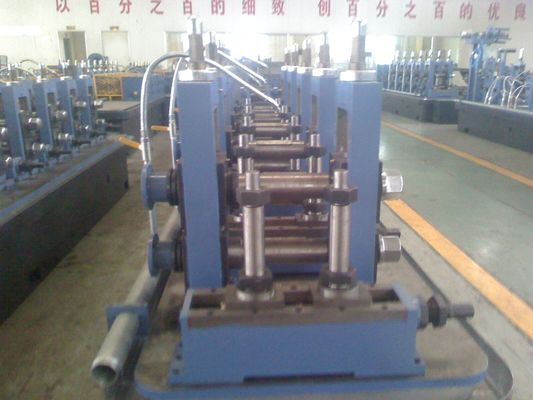
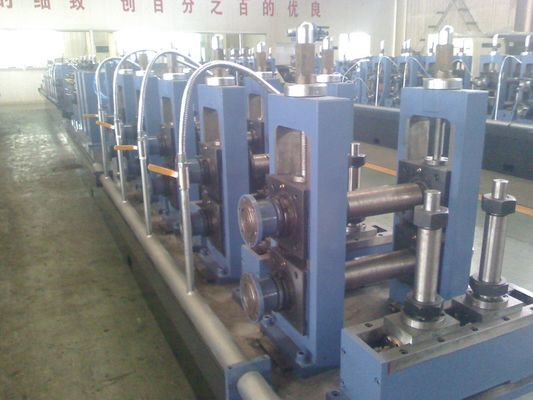
In the forming section, multiple roll stands gradually bend the flat steel strip into a round tube shape. For galvanized steel strip, roll surface design and forming pressure must reduce surface scratches.
The high-frequency welding system heats the strip edges and joins them into a continuous welded pipe. Stable edge alignment and squeeze pressure are important for weld quality.
After welding, the pipe passes through cooling and sizing sections. The sizing stands control the final outer diameter, square size, rectangular size, straightness, and pipe shape.
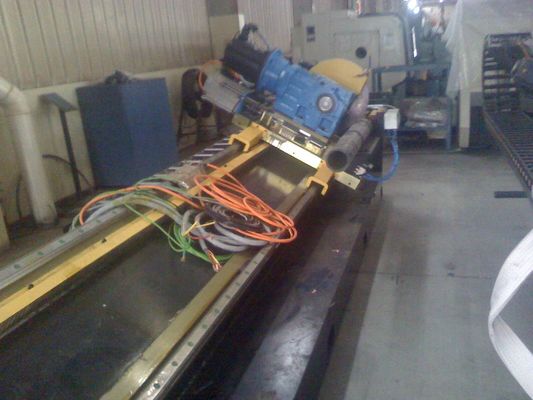
The flying saw cuts the pipe to the required length while the line keeps running. Finished pipes move to the run-out table for collection, inspection, bundling, or further processing.
If the customer needs black pipe before hot-dip galvanizing, the welded pipe can be produced first and then sent to a separate galvanizing process according to the final standard.
How To Choose
1. Confirm the production route
Before selecting the machine, the buyer must confirm whether the pipe will be made from pre-galvanized steel coil or produced as black welded pipe before post-hot-dip galvanizing.
Pre-galvanized strip production needs stronger surface protection during forming. Post-galvanizing production needs strong welded pipe quality and compatibility with the galvanizing process.
2. Confirm pipe shape and size range
The buyer should provide the minimum and maximum pipe diameter, square tube size, rectangular tube size, and wall thickness.
A machine designed for too wide a range may increase tooling cost and adjustment difficulty. A clear product list helps design a more practical production line.
3. Confirm coating and surface requirement
For galvanized steel strip, the zinc coating condition affects roll design, welding control, and pipe handling.
If the pipe is used for visible products or outdoor applications, surface scratches and weld area treatment must be considered before ordering.
4. Confirm production speed
Higher speed does not always mean better output. Real production efficiency depends on wall thickness, pipe size, welding stability, coil change time, cutting length, and operator skill.
For long-term factory operation, stable quality at practical speed is more valuable than unstable high-speed production.
5. Confirm welding and inspection requirement
If the pipe is used for construction, fluid transport, or export markets, the buyer should confirm whether hydro testing, eddy current testing, end facing, or marking is required.
These downstream requirements should be considered during the whole line design, not added after the machine is installed.
6. Confirm workshop layout and power supply
The pipe mill layout should match the workshop length, crane capacity, coil storage area, finished pipe storage area, and local electrical standard.
A good layout reduces material handling time and improves production safety.
Supporting Content Plan for Better Search Coverage
Technical Article: How Galvanized Steel Pipe Is Produced by Roll Forming
This article can explain the process from galvanized coil feeding, roll forming, high-frequency welding, sizing, cutting, and surface protection.
It helps buyers understand why galvanized steel pipe production requires more attention to roll design and surface handling.
Industry Analysis: Why Galvanized Steel Pipes Are Used in Outdoor Construction
This article can explain the demand from fencing, greenhouse structures, construction frames, agricultural facilities, and infrastructure projects.
It can also discuss why corrosion resistance is an important buying factor in humid, outdoor, and coastal environments.
Application Case: Galvanized Pipe Mill Solution for Fence and Greenhouse Tube Factory
This case page can show how a customer selects the machine according to tube size, wall thickness, zinc coating requirement, cutting length, production speed, and market use.
It helps the page cover real buying intent instead of only displaying machine photos.
FAQ
1. Is a hot-dipped galvanized steel pipe mill the same as a galvanizing line?
No. A pipe mill forms and welds steel strip into pipe. A galvanizing line applies zinc coating through a hot-dip process.
Some customers use pre-galvanized steel strip to make pipes directly. Other customers produce black welded pipes first and then send them to a separate hot-dip galvanizing line.
2. Can this machine produce both round pipe and square tube?
Yes, the machine can be designed to produce round pipe, square tube, and rectangular tube if the size range and tooling plan are suitable.
The exact feasibility depends on pipe size, wall thickness, forming method, roll tooling, and changeover requirements.
3. What information is needed before quotation?
The buyer should provide pipe shape, size range, wall thickness, raw material, zinc coating condition, production capacity target, cutting length, power supply, and workshop layout.
If the pipe must meet ASTM, EN, BS, or local standards, these requirements should also be provided before technical design.
4. How can surface scratches be reduced during galvanized pipe production?
Surface scratches can be reduced by proper roll design, smooth roll surface, controlled forming pressure, correct strip guiding, and careful pipe handling after cutting.
Operator training and regular roll maintenance are also important for keeping stable surface quality.
5. What is the most important factor when choosing a galvanized pipe mill?
The most important factor is matching the machine with the real pipe application.
A fence pipe factory, greenhouse tube factory, structural tube factory, and fluid pipe factory may all need different machine configuration, inspection equipment, and downstream processing.
Conclusion
This Hot-Dipped Galvanized Steel Pipe Mill and Roll Forming Equipment is not just a machine for making steel tubes. It is a production solution for factories that need corrosion-resistant pipe products for construction, agriculture, fencing, greenhouse, furniture, and general fabrication markets.
A qualified galvanized pipe production line should answer practical buyer questions: what material will be used, what pipe standard must be met, how to protect the zinc surface, how to control welding quality, and how to choose the right machine configuration.
For customers who want stable output, lower scrap rate, and long-term production value, the correct choice is a pipe mill solution designed around the final product, not a generic machine selected only by pipe diameter.


 Your message must be between 20-3,000 characters!
 English