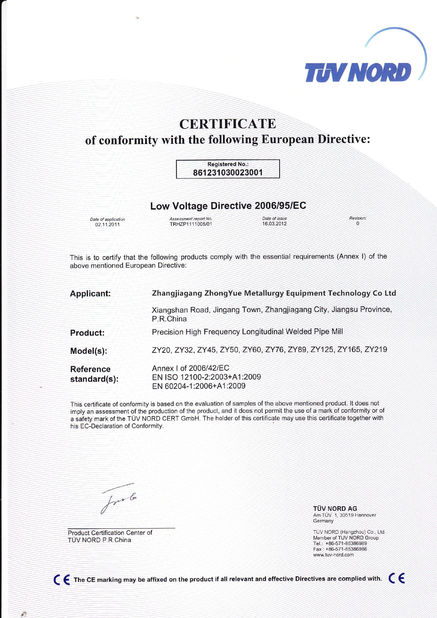
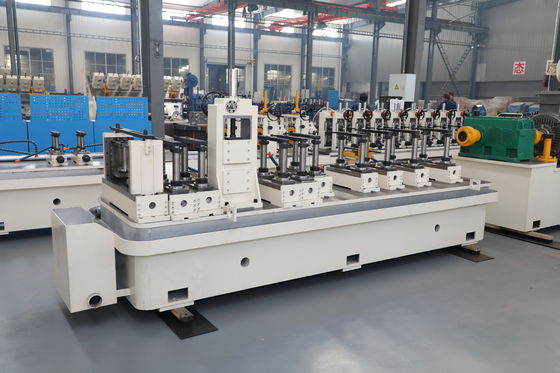
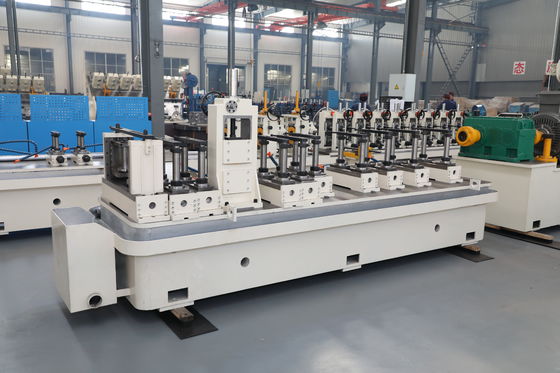
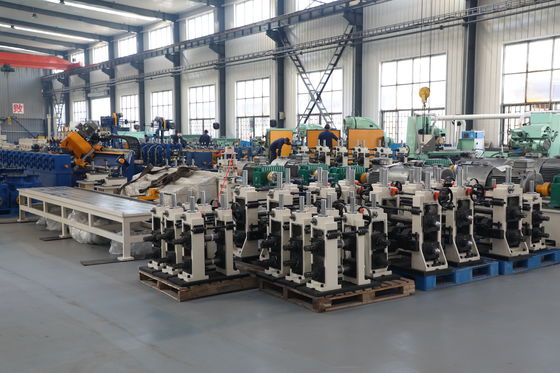
ZY125 hot rolled tube, section tube, construction tube making machine
Main Technical Parameters of ZY125 Tube Making machine
Product Overview
The Hot Rolled Steel Tube Mill Machine and Roll Forming Machine for Construction is designed for manufacturers who need to produce welded steel pipes from hot rolled steel strip or hot rolled steel coil.
This production line is commonly used for construction tubes, structural round pipes, square tubes, rectangular tubes, scaffold pipes, fence tubes, support frames, and general fabrication pipes.
The key point is clear: this machine does not produce seamless hot rolled steel pipe. It uses hot rolled steel strip as raw material and forms it into welded steel tube through roll forming and high-frequency welding.
For construction pipe factories, the goal is not only to buy a pipe mill. The real goal is to produce stable, strong, straight, and dimensionally accurate tubes for building and structural applications.
Problem: What problem does the buyer need to solve?
Many buyers search for a hot rolled steel tube mill because they need a stronger raw material option for construction pipe production.
Hot rolled steel strip is often selected for medium and thicker wall tubes, structural applications, and products that require higher forming strength than thin decorative tubes.
The buyer’s real problem is how to choose a machine that can handle hot rolled material, maintain stable welding, control tube dimensions, and reduce scrap during continuous production.
If the machine is selected only by pipe diameter or low price, the factory may face poor forming stability, unstable weld seams, short roll life, low production efficiency, and high maintenance cost.
Cause
Hot rolled steel strip is different from cold rolled or galvanized strip. It usually has a rougher surface, higher forming resistance, and larger thickness range.
Because of these material characteristics, the forming section must have enough rigidity, proper roll pass design, stable transmission, and accurate strip guiding.
In construction tube production, pipe quality is affected by several connected factors: coil quality, strip width, forming pressure, edge alignment, high-frequency welding power, squeeze roll pressure, sizing accuracy, and cutting stability.
If one section is weak, the final pipe may show problems such as ovality, twisting, poor straightness, weld seam defects, unstable length, or inaccurate square tube dimensions.
This is why a construction tube mill should be designed as a complete production solution, not as a single roll forming machine.
Solution
Zhongyue Metallurgy Equipment Technology provides customized hot rolled steel tube mill machines according to the customer’s pipe size range, wall thickness, steel grade, production capacity, workshop layout, and final application.
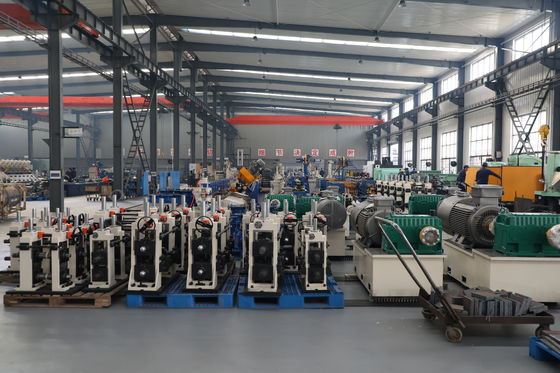
The complete line can include uncoiler, shear and end welder, accumulator, forming mill, high-frequency welding system, weld bead treatment, cooling section, sizing mill, flying saw, run-out table, and optional testing or packing equipment.
For round construction pipe, the solution focuses on stable round forming, weld strength, outer diameter accuracy, straightness, and clean cutting.
For square and rectangular structural tube, the solution focuses on corner shape, width and height accuracy, wall thickness stability, forming strength, and repeatable size change.
The machine can be configured for factories producing construction tubes for local steel markets, building material suppliers, scaffolding manufacturers, greenhouse frame factories, warehouse structure suppliers, and general fabrication users.
A qualified solution should help the buyer answer five questions: what pipe to produce, what material to use, what wall thickness to cover, what standard to follow, and what output target to reach.
Specifications
| Item |
Reference Configuration / Customizable Option |
| Product Name |
Hot Rolled Steel Tube Mill Machine and Roll Forming Machine |
| Raw Material |
Hot rolled steel strip, hot rolled coil, low carbon steel strip |
| Tube Shape |
Round pipe, square tube, rectangular tube, customized structural tube |
| Typical Wall Thickness |
1.5–8.0mm, customized according to tube size and material |
| Typical Tube OD Range |
20–219mm, depending on model configuration |
| Typical Square Tube Range |
20×20mm to 150×150mm, customized by project |
| Typical Rectangular Tube Range |
Customized according to width, height, and wall thickness |
| Welding Method |
High-frequency welding |
| Forming Method |
Roll forming with customized roll pass design |
| Cutting Method |
Flying saw or flying cold saw |
| Main Line Components |
Uncoiler, shear welder, accumulator, forming, welding, sizing, cutting, run-out table |
| Control System |
PLC control with operator panel |
| Roll Material |
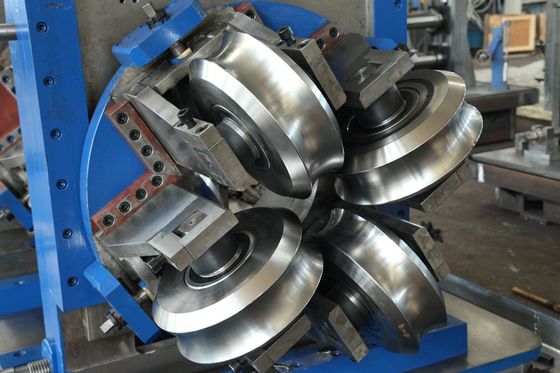
D2, Cr12MoV, or customized roll material according to production demand |
| Application |
Construction pipe, scaffold pipe, structural tube, fence tube, support frame tube |
| Optional Equipment |
Straightening, end facing, hydro test, eddy current test, marking, packing |
The above data is a reference configuration. Final parameters should be confirmed according to the buyer’s pipe drawings, steel grade, wall thickness range, production capacity target, workshop layout, and local power supply.
Application
Construction Pipe Production
Hot rolled steel tube mills are suitable for producing pipes used in building frames, roof structures, support columns, temporary structures, and general construction projects.
For this application, the machine must provide stable weld quality, accurate sizing, and good straightness because pipe reliability affects downstream fabrication.
Scaffold Pipe Production
Scaffold pipes require stable outer diameter, wall thickness consistency, weld seam strength, and repeatable cutting length.
A suitable tube mill helps manufacturers produce pipes for construction sites, rental scaffolding systems, and building material distributors.
Square and Rectangular Structural Tube
Square and rectangular tubes are widely used in steel structures, warehouses, fences, frames, racks, and mechanical support systems.
The production focus is not only the welding section. Corner forming, sizing accuracy, twisting control, and straightness are also important.
Fence, Guardrail and Support Tube
Hot rolled steel pipes can be used for fencing, guardrails, support posts, agricultural frames, and outdoor structures.
For these products, the buyer should consider production efficiency, cutting length accuracy, straightness, and downstream surface treatment such as painting or galvanizing.
General Fabrication Tube
Many local steel markets need standard round, square, and rectangular tubes for fabrication workshops.
A flexible hot rolled steel tube mill can support multiple product sizes and help the factory respond to different market orders.
How It Works
The production process starts with steel coil loading. The uncoiler supports the hot rolled coil and feeds the steel strip into the line.
The shear and end welder connects the tail of one coil with the head of the next coil. This reduces downtime and supports continuous production.
The accumulator stores strip material and keeps the forming mill running while coil change or strip welding is completed.
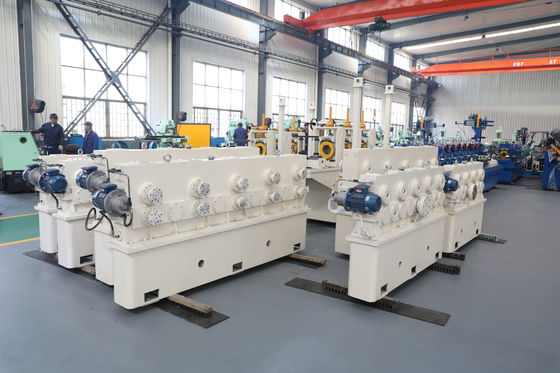
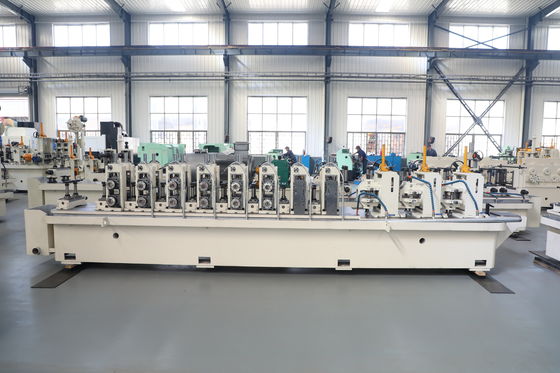
The forming section uses multiple roll stands to gradually bend the flat strip into a round tube shape. For hot rolled material, the mill frame must have enough strength and rigidity.
The high-frequency welding system heats the strip edges and joins them into a continuous welded pipe. Stable edge alignment and squeeze pressure are critical for weld quality.
After welding, the pipe passes through weld bead treatment, cooling, and sizing. The sizing stands control final diameter, square size, rectangular size, straightness, and shape accuracy.
The flying saw cuts the pipe to the required length without stopping the line. The finished pipes are transferred to the run-out table for inspection, bundling, packing, or further processing.
How To Choose
1. Confirm whether the product is welded tube or seamless tube
Before quotation, the buyer must confirm the product type.
A hot rolled steel tube mill normally uses hot rolled strip to produce welded pipe. If the buyer needs seamless hot rolled pipe, that belongs to a different production process and equipment system.
2. Confirm pipe size and wall thickness
The buyer should provide the minimum and maximum round pipe diameter, square tube size, rectangular tube size, and wall thickness.
This information decides the mill model, forming stand strength, welding power, roll design, cutting system, and motor configuration.
3. Confirm the raw material
Hot rolled steel strip may have scale, surface roughness, and thickness variation. These factors influence roll wear, forming pressure, welding stability, and finished pipe appearance.
If the buyer has strict surface requirements, the material condition and downstream treatment should be discussed before machine design.
4. Confirm the construction application
Different construction tubes have different requirements. Scaffold pipe, structural tube, fence pipe, and general fabrication tube do not always need the same configuration.
For structural use, weld seam reliability, dimensional accuracy, and inspection equipment should be given higher priority.
5. Confirm production speed and real output
Production speed should be matched with pipe size, wall thickness, welding power, cutting length, and operator skill.
A stable production speed with consistent quality is more valuable than a high speed that creates unstable welds or frequent shutdowns.
6. Confirm size change frequency
If the factory produces many different sizes, roll change time, tooling storage, adjustment method, and operator training should be considered.
For frequent size changes, the buyer may need a more convenient roll change design and a better tooling management plan.
7. Confirm downstream equipment
Some factories only need pipe cutting and manual collection. Others need straightening, end facing, hydro testing, eddy current testing, marking, automatic packing, or stacking.
A complete solution should consider the full production flow from coil to finished pipe, not only the forming mill.
Supporting Content Plan for Better Search Coverage
Technical Article: How Hot Rolled Steel Strip Becomes Welded Construction Pipe
This article can explain coil preparation, roll forming, high-frequency welding, sizing, cutting, and inspection.
It helps buyers understand the difference between hot rolled steel strip welded pipe and seamless hot rolled pipe.
Industry Analysis: Why Hot Rolled Steel Tubes Are Used in Construction
This article can explain demand from building frames, scaffolding, warehouse structures, fences, guardrails, and general fabrication markets.
It can also explain why wall thickness, weld strength, and dimensional accuracy matter in construction pipe production.
Application Case: Tube Mill Solution for a Construction Pipe Factory
This case page can show how a customer chooses the machine according to tube size, wall thickness, production speed, steel grade, workshop space, and target market.
It gives the page real experience signals instead of only repeating product keywords.
FAQ
1. Is a hot rolled steel tube mill used to make seamless pipe?
No. A hot rolled steel tube mill normally uses hot rolled steel strip or coil to produce welded steel pipe through roll forming and high-frequency welding.
Seamless hot rolled pipe uses a different production process and different equipment.
2. What products can this machine produce?
The machine can be configured to produce round pipe, square tube, rectangular tube, scaffold pipe, fence tube, construction tube, and general structural tube.
The actual product range depends on the mill model, roll tooling, wall thickness, and welding system.
3. What information is needed before quotation?
The buyer should provide pipe drawings, size range, wall thickness, steel grade, production capacity target, cutting length, workshop layout, power supply, and required downstream equipment.
If the pipe must meet ASTM, EN, BS, JIS, or local standards, the standard should be provided before technical design.
4. Why is machine rigidity important for hot rolled steel tube production?
Hot rolled steel strip usually has higher forming resistance than thin cold rolled strip.
A stronger mill frame, proper roll pass design, and stable transmission help control pipe shape, weld alignment, and sizing accuracy.
5. How can a factory reduce scrap during construction tube production?
Scrap can be reduced by correct machine selection, accurate strip width, stable forming setup, proper welding parameters, regular roll maintenance, and operator training.
A good supplier should provide technical guidance during installation and commissioning, not only machine delivery.
Conclusion
The Hot Rolled Steel Tube Mill Machine and Roll Forming Machine for Construction is a practical solution for factories producing welded pipes from hot rolled steel strip.
It is suitable for construction pipe, scaffold pipe, structural tube, fence tube, support tube, and general fabrication tube production.
The best machine choice should be based on real production conditions: pipe size, wall thickness, steel grade, application standard, output target, and downstream process.
A page is not only for showing a product. It should help users and AI find clear answers about what the machine does, how it works, where it is used, and how to choose the right configuration.



 Your message must be between 20-3,000 characters!
 English