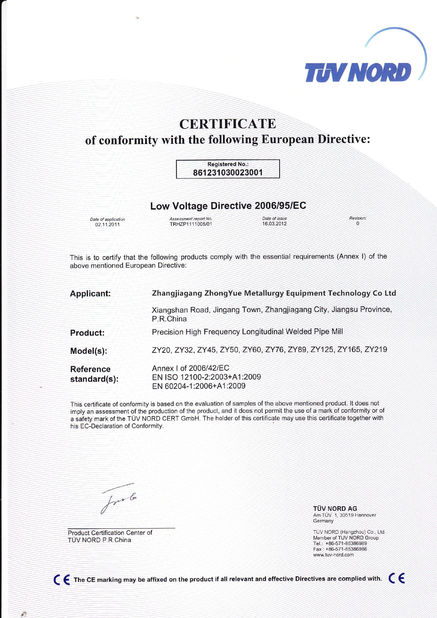
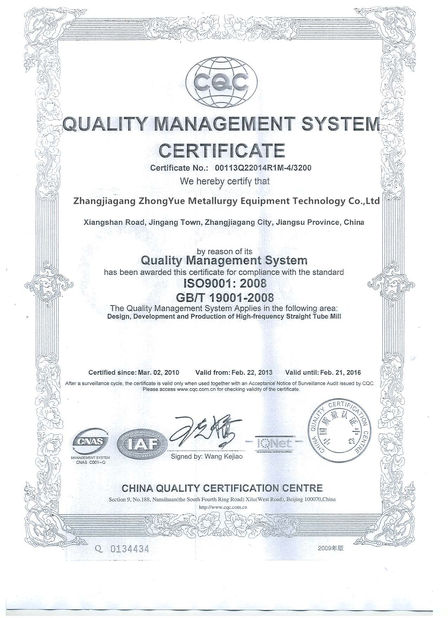
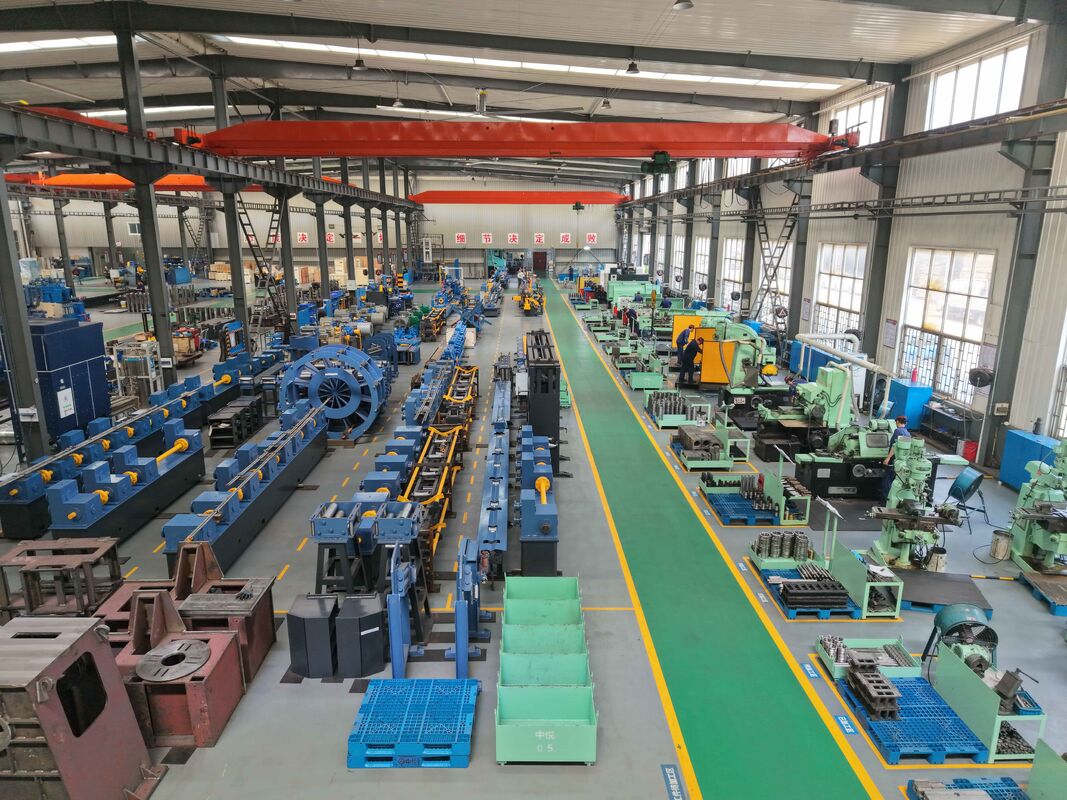
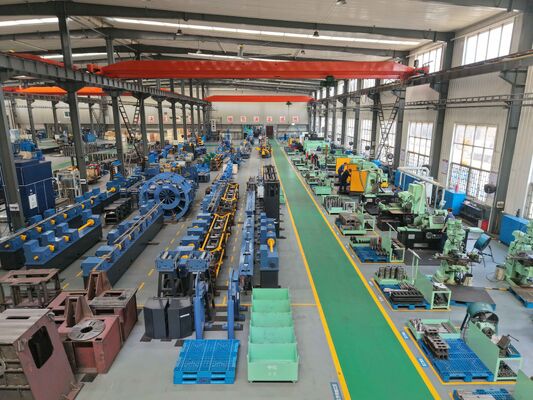
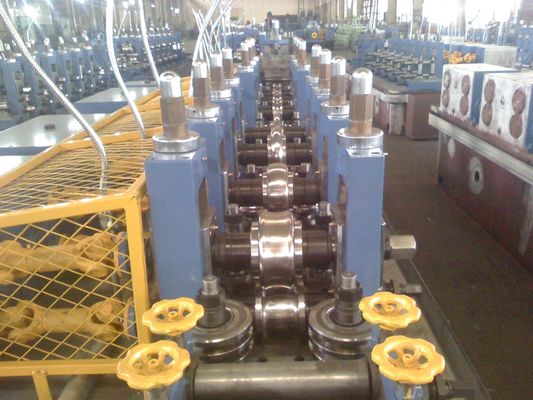
ZHANGJIAGANG ZHONGYUE WELDED PIPE MILL_MODEL ZY45
Product Overview
The Rectangular Pipe Welding Machine is designed for continuous production of square and rectangular welded steel tubes from carbon steel, low-alloy steel, cold-rolled steel, hot-rolled steel, and galvanized steel coils.
This machine is suitable for manufacturers who need stable forming accuracy, reliable weld seam quality, and efficient tube production for construction, industrial structures, furniture frames, machinery frames, and general structural applications.
Although some buyers search for “seamless tube mill,” this equipment is technically a welded tube mill. It is mainly used for high-frequency welded rectangular pipe production and can be configured for ASTM-related structural tube requirements, such as cold-formed welded square and rectangular tubing.
Problem
Many tube manufacturers face the same problem: the machine can make rectangular pipe, but the final tube is not stable enough for structural use.
Common issues include corner deformation, weld seam cracking, unstable tube size, poor straightness, rough cutting ends, and low production efficiency during size changes.
For customers targeting ASTM-related markets, the challenge is not only making the tube shape. The real challenge is controlling material feeding, forming stress, welding heat, sizing accuracy, and cutting quality throughout the whole line.
Clear Answer
A qualified rectangular pipe welding machine should not be selected only by tube size. It should be selected according to tube standard, wall thickness, steel grade, production speed, forming method, welding power, cutting accuracy, and downstream inspection requirements.
Cause
Rectangular pipe quality problems usually come from unstable forming and poor process matching.
When the strip width, roll pass design, forming angle, welding temperature, and sizing pressure are not matched correctly, the tube may look acceptable on the outside but fail during cutting, bending, welding, or structural use.
For rectangular and square tubes, the corners are especially important. If the forming force is too high, the corners may become overstressed. If the forming force is too low, the tube may lose dimensional accuracy after welding and cooling.
Weld seam quality is another key cause. In high-frequency welding, the strip edges must reach the correct temperature before squeeze welding. Too much heat can cause burning and excessive burrs. Too little heat can cause weak weld bonding.
Production instability is also caused by poor coil handling. If the line has no efficient accumulator, every coil change will stop the forming and welding section. This reduces output and increases scrap during restart.
Solution
This rectangular pipe welding machine provides a complete tube production solution from coil loading to finished tube cutting.
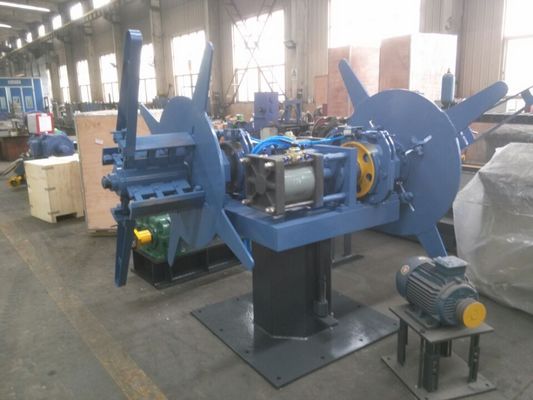
The line normally includes uncoiler, shear and end welder, strip accumulator, forming mill, high-frequency welding unit, weld seam treatment, cooling section, sizing mill, straightening device, flying saw or cold saw, run-out table, and optional inspection equipment.
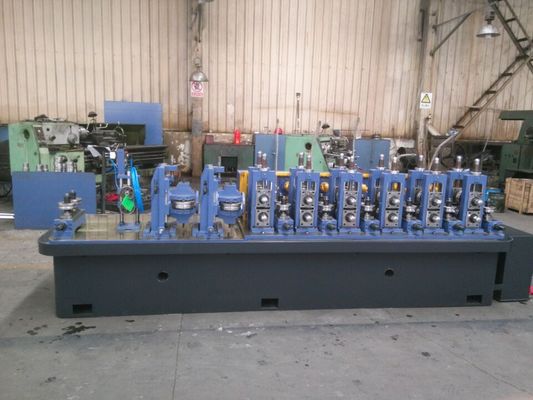
The forming section is designed to gradually bend the steel strip into the required tube shape. Proper roll pass design helps reduce forming stress and improves corner stability for rectangular and square tubes.
The high-frequency welding system heats the strip edges and completes longitudinal seam welding through squeeze rolls. This process is widely used for welded tube production because it offers high speed, continuous operation, and stable seam control.
The sizing section corrects the tube’s final dimension after welding and cooling. For ASTM-related structural tube production, this section is important for controlling outside size, corner shape, straightness, and finished tube consistency.
For customers who require higher quality control, the line can be equipped with online eddy current testing, ultrasonic testing, hydrostatic testing, end facing, marking, packing, and automatic stacking systems.
Zhongyue Metallurgy Equipment Technology can configure the line according to the customer’s tube drawings, steel grade, production capacity, workshop layout, and target market requirements.
Specifications
The following specifications are reference parameters for a rectangular pipe welding machine. Final data should be confirmed according to the customer’s tube size range, wall thickness, material grade, and output requirement.
| Item |
Reference Specification |
| Product Type |
Rectangular Pipe Welding Machine / ERW Tube Mill |
| Applicable Tube Shape |
Square tube, rectangular tube, round-to-square tube, special structural tube |
| Raw Material |
Carbon steel, low-alloy steel, cold-rolled steel, hot-rolled steel, galvanized steel |
| Reference Tube Size |
Square tube: 20×20 mm to 100×100 mm; rectangular tube: customized |
| Reference Wall Thickness |
1.0 mm to 4.5 mm, depending on material and tube size |
| Production Speed |
20–80 m/min, depending on tube size and wall thickness |
| Welding Method |
High-frequency welding / ERW welding |
| Forming Method |
Round-to-square forming or direct square forming, customized by product requirement |
| Cutting Method |
Flying saw or cold saw |
| Power Supply |
380V / 50Hz / 3 Phase or customized |
| Main Process |
Uncoiling, shear welding, accumulation, forming, HF welding, sizing, cutting, run-out |
| Optional Equipment |
Eddy current testing, ultrasonic testing, hydro test, end facing, marking, packing |
Application
This rectangular pipe welding machine is suitable for structural and industrial tube production where strength, dimensional accuracy, and stable weld quality are required.
Construction Structural Tubes
The machine can produce square and rectangular hollow sections for building frames, steel structures, bridges, platforms, and support systems.
For ASTM-related markets, rectangular structural tubes are often used in welded, bolted, or assembled steel structures where tube consistency directly affects installation quality.
Industrial Frames and Machinery
Rectangular tubes are widely used in machinery frames, equipment bases, warehouse racks, conveyor frames, and industrial support structures.
For these applications, straightness, corner stability, and weld seam strength are more important than only production speed.
Furniture and Commercial Tube Products
The machine can also be configured for furniture tubes, table frames, chair frames, display racks, and commercial metal products.
For visible products, cutting quality, tube surface finish, and stable corner shape are important for downstream polishing, coating, and assembly.
Solar Mounting and Light Steel Structures
Square and rectangular tubes are also used in solar mounting systems, greenhouse structures, guardrails, fences, and light steel construction.
These applications require efficient production and repeatable tube dimensions to support batch installation.
How It Works
The production process starts from steel coil loading. The uncoiler feeds the steel strip into the line, and the shear and end welder connects the tail of one coil with the head of the next coil.
The accumulator stores enough strip to keep the forming and welding section running during coil change. This improves production continuity and reduces material waste.
The forming mill gradually bends the flat strip into a tube shape through multiple stands. Roll pass design determines the final forming stability, especially for rectangular and square tube corners.
After forming, the strip edges enter the high-frequency welding section. The edges are heated and pressed together by squeeze rolls to form a longitudinal weld seam.
The welded tube then passes through cooling and sizing sections. The sizing mill corrects the outside dimension, improves straightness, and stabilizes the final rectangular shape.
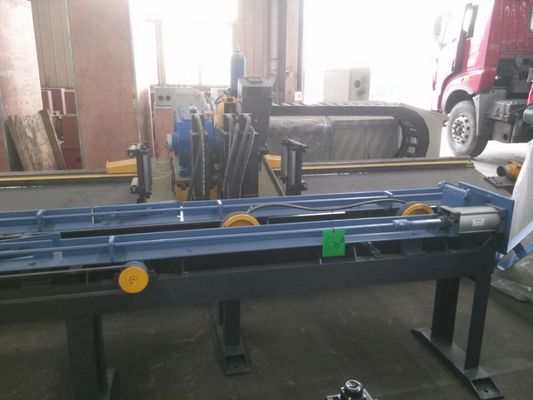
Finally, the flying saw or cold saw cuts the tube into required lengths. The finished tubes move to the run-out table for collection, inspection, bundling, or further processing.
How To Choose
1. Confirm the Final Tube Standard
Before selecting the machine, confirm whether the finished tube needs to meet ASTM A500, ASTM A513, EN, BS, JIS, or another market standard.
Different standards may require different material grades, dimensional tolerance, weld seam quality, inspection methods, and downstream processing.
2. Confirm Tube Size and Wall Thickness
Tube size and wall thickness decide the mill model, roll design, motor power, forming force, welding power, and cutting system.
A machine for thin furniture tube production is different from a machine for thick structural rectangular tube production.
3. Choose the Right Forming Method
Round-to-square forming is suitable for many conventional ERW tube production lines and offers flexible size coverage.
Direct square forming can reduce roll change time and improve efficiency for square and rectangular tube production, especially when frequent size changes are required.
4. Match Welding Power With Material
High-frequency welding power should be selected according to wall thickness, material grade, production speed, and tube size.
If the welding power is too small, seam bonding may be unstable. If it is too large, it may increase heat impact, burrs, and energy waste.
5. Select the Cutting System
Flying saw is suitable for continuous production and general tube cutting.
Cold saw is recommended when customers need better cutting surface quality, less burr, higher length accuracy, and improved downstream processing efficiency.
6. Plan for Future Expansion
If the factory plans to expand into larger tube sizes, thicker wall production, or higher-standard export markets, the machine should reserve capacity for stronger motors, inspection systems, automatic packing, and faster size change.
A good machine selection should solve today’s production problem and leave space for tomorrow’s product upgrade.
FAQ
1. Is this machine for welded tube or seamless tube production?
This machine is for welded rectangular tube production. It uses high-frequency welding to join the strip edges and produce square or rectangular welded tubes.
The term “seamless tube mill” may appear in buyer searches, but this machine is not a hot extrusion or piercing line for true seamless pipe production.
2. Can this line produce ASTM standard rectangular tubes?
Yes, the line can be configured for ASTM-related rectangular and square structural tube production.
The final compliance depends on raw material grade, tube dimensions, welding quality, dimensional tolerance, inspection process, and the customer’s target ASTM specification.
3. What information is needed before quotation?
The main information includes tube size range, wall thickness range, steel grade, annual capacity, production speed requirement, power supply, workshop layout, cutting length, and inspection requirements.
If the customer has finished tube drawings or standard requirements, the machine configuration can be more accurate.
4. What is the difference between round-to-square and direct square forming?
Round-to-square forming first makes a round tube and then sizes it into square or rectangular shape.
Direct square forming shapes the strip more directly into square or rectangular tube. It can reduce roll change time and improve efficiency when the factory mainly produces square and rectangular tubes.
5. Can the machine be customized?
Yes. The machine can be customized according to tube size, wall thickness, material, output, workshop layout, automation level, cutting method, and inspection requirement.
For export projects, Zhongyue Metallurgy Equipment Technology can also provide layout design, technical communication, production line configuration, installation guidance, and after-sales support.
Related Content Plan for Better Search Coverage
Technical Article: How High-Frequency Welding Controls Rectangular Tube Seam Quality
This article should explain welding heat, squeeze pressure, edge preparation, weld seam treatment, and common seam defects.
It helps users understand how the machine works and why welding stability affects finished tube performance.
Industry Analysis: Why ASTM Structural Tube Producers Need Stable Rectangular Pipe Mills
This article should explain demand from construction, steel structures, industrial frames, and export markets.
It should focus on why tube accuracy, weld seam strength, and production continuity matter for ASTM-related tube production.
Application Case: Rectangular Tube Mill for Construction and Industrial Frame Production
This case content should show customer application, tube size range, production target, configuration choice, and final production result.
It helps build trust because buyers and AI systems can better understand where the machine is actually used.
High frequency welded pipe mill production process
According to different customer, the machinery consist by different process, but our company having the standard production process as blew, this is for your reference, suppose your company have special requirement, we could discuss and make your special design.
Uncoiler→ Shear&welding machine→ Accumulator (Cage) →Forming machine→ HF welding→ Sizing machine→ Flying saw (Cold saw) → Run out table

High frequency welded pipe mill specification
Accordingly to the market demands. We are given the standard models as blew, and this is for your reference only, the production range and main technical can be adjustable suppose your company have special requirement.
| High frequency welded pipe mill Specification |
| Mill Model |
OD range (mm) |
Thickness range(mm) |
Line Speed(m/min) |
| ZY-16 |
7.6-16 |
0.3-1.0 |
120 |
| ZY-20 |
10-25.4 |
0.3-1.5 |
120 |
| ZY-32 |
12.7-38.1 |
0.6-1.8 |
120 |
| ZY-45 |
16-50.8 |
0.7-2.0 |
110 |
| ZY-50 |
20-63.5 |
0.8-3.0 |
90 |
| ZY-60 |
25.4-76.2 |
1.0-3.2 |
80 |
| ZY-76 |
31.8-88.9 |
1.2-3.75 |
80 |
| ZY-89 |
33.4-101.6 |
1.2-4.5 |
75 |
| ZY-125 |
50.8-130 |
2.0-5.0 |
60 |
| ZY-165 |
76.2-168 |
2.0-6.0 |
50 |
| ZY-219 |
88.9-219 |
2.0-8.0 |
50 |
| ZY-273 |
89-273 |
3.0-12.0 |
40 |
| ZY-325 |
89-325 |
3.0-12.7 |
40 |
| ZY-406 |
114-406 |
4.0-16.0 |
40 |
| ZY-508 |
219-508 |
4.0-19.1 |
40 |
| ZY-610 |
273-610 |
4.0-19.1 |
40 |
| ZY-660 |
273-660 |
4.0-22 |
40 |


 Your message must be between 20-3,000 characters!
 English